Category: ETP Field Guide

  • 1.2.2 Safe Isolation and Return to Service

    বাংলায় পড়ুন

    A standby pump can show a run signal and still deliver too little water. The repair is ready for handover when it can meet its duty under a controlled test and the site’s protections are available.

    10-second illustration. See the work sequence and the example before-and-after flow test at the same head.

    Follow the site work sequence

    1. Coordinate. Operations and maintenance agree on the outage, treatment continuity, permit, and responsible people.
    2. Isolate and verify. Authorized staff apply the site’s hazardous-energy procedure and verify isolation and stored-energy control. A stop command provides only operating status. Treat tank and pit access under the site’s confined-space program.
    3. Restore and test. Authorized staff clear the work area, restore safeguards, and follow the approved return-to-service test. Record the before and after readings and the operations handover.

    One pump, two readings

    ET-01’s example test band is 76–84 m³/h at approximately 22 m head. Pump P-102B gives 52 m³/h at 22 m before the work, so it is recorded as unavailable for that duty. After an authorized correction to a suction restriction, it gives 79 m³/h at the same head. That meets the example flow criterion. The team verifies the remaining conditions and protections before the responsible person signs off.

    Further reading · OSHA technical reference on hazardous-energy control
    ‹ Previous lesson · Chapter contents · Next lesson ›

  • ১.১.৩ COD লোড ও ইকুয়ালাইজেশন

    Read in English

    কেমিক্যাল অক্সিজেন ডিমান্ড (COD) হলো নির্ধারিত টেস্টে অক্সিডাইজ হওয়া পদার্থের অক্সিজেন-সমতুল্য পরিমাপ। COD কনসেনট্রেশন থেকে ওয়েস্টওয়াটারে দূষণের মাত্রা সম্পর্কে ধারণা পাওয়া যায়। লোড থেকে বোঝা যায়, একটি নির্দিষ্ট সময়ে প্লান্টে কত COD এসেছে।

    ১০ সেকেন্ডের অ্যানিমেশন। দুটি ৮ ঘণ্টার শিফটে কীভাবে মোট ১,১০৪ kg COD লোড আসে, দেখুন।

    কনসেনট্রেশন থেকে লোড হিসাব

    COD ম্যাস (kg) = ভলিউম (m³) × প্রতিনিধিত্বশীল COD (mg/L) ÷ ১,০০০। একই সময়সীমার কনসেনট্রেশন ও ভলিউম ব্যবহার করুন। ব্যাচ ডিসচার্জের সময় নেওয়া গ্র্যাব স্যাম্পল ওই মুহূর্তের অবস্থা দেখায়। পুরো সময়ের লোড অনুমানে উপযুক্ত প্রতিনিধিত্বশীল স্যাম্পল প্রয়োজন।

    • শিফট A। ৬০০ m³ × ৭০০ mg/L ÷ ১,০০০ = ৮ ঘণ্টায় ৪২০ kg।
    • শিফট B। ৭৬০ m³ × ৯০০ mg/L ÷ ১,০০০ = ৮ ঘণ্টায় ৬৮৪ kg।
    • দুই শিফট। ১৬ ঘণ্টায় ১,৩৬০ m³ পানিতে ১,১০৪ kg। ফ্লো-ওয়েটেড COD প্রায় ৮১২ mg/L।

    EQ দিয়ে পরের কয়েক ঘণ্টা বুঝুন

    ধারণক্ষমতা ও মিক্সিং থাকলে EQ প্রোডাকশনের শক লোডকে সময়ের সঙ্গে ছড়িয়ে দিতে পারে। ET-01-এ অপারেটিং পানির ভলিউম ১৮০ m³ ও স্থির ফ্লো ৭৫ m³/h হলে নমিনাল রিটেনশন টাইম ২.৪ h। বাস্তব রিটেনশন প্রবাহের ধরন ও লেভেল পরিবর্তনের ওপর নির্ভর করে। ট্যাংক বাড়তি কত পানি নিতে পারবে, তা বুঝতে খালি ব্যবহারযোগ্য ভলিউম ও নেট ফিলিং রেট দেখুন। এটি রিটেনশন টাইম থেকে আলাদা হিসাব। বড় ডিসচার্জের আগে প্রোডাকশন টিম জানালে অপারেটর বাফার ব্যবহারের সময় পান।

    আরও পড়ুন · IFC টেক্সটাইল ওয়েস্টওয়াটার গাইডলাইন

    ‹ আগের লেসন · অধ্যায়ের সূচি · পরের লেসন ›

  • 1.1.3 COD Load and Equalization

    বাংলায় পড়ুন

    Chemical oxygen demand (COD) is a measure of the oxygen equivalent of material oxidized by a specified test. COD concentration tells you how strong the wastewater is. The load tells you how much reaches the plant during a stated period.

    10-second illustration. See how the two 8-hour COD loads add up to 1,104 kg.

    Turn concentration into load

    COD mass (kg) = volume (m³) × representative COD (mg/L) ÷ 1,000. Match the concentration and volume to the same interval. A grab sample during a batch dump describes that moment. A suitable representative sample supports the interval estimate.

    • Shift A. 600 m³ × 700 mg/L ÷ 1,000 = 420 kg in 8 h.
    • Shift B. 760 m³ × 900 mg/L ÷ 1,000 = 684 kg in 8 h.
    • Both shifts. 1,104 kg in 1,360 m³ gives a flow-weighted COD of about 812 mg/L over 16 h.

    Use EQ to read the next few hours

    EQ can spread a production shock over time when capacity and mixing are available. At ET-01, 180 m³ of operating liquid volume at a steady 75 m³/h gives a nominal retention time of 2.4 h. Actual retention depends on the flow pattern and changing levels. To estimate how much extra water the tank can receive, check the free usable volume and the net filling rate. That is a separate calculation from retention time. A conversation with production before a large discharge gives the operator time to use the available buffer.

    Further reading · IFC textile wastewater guidance

    ‹ Previous lesson · Chapter contents · Next lesson ›

  • ১.১.২ শিফট রাউন্ড ও ফ্লো রেকর্ড

    Read in English

    ভালো শিফট লগ দেখে পরের অপারেটর বুঝতে পারেন কী ঘটেছিল। আগের হ্যান্ডওভার পড়ে ইনলেট থেকে আউটলেট পর্যন্ত অনুমোদিত রুট দেখুন। কোন প্রোডাকশন ব্যাচ বা ক্লিনিং ডিসচার্জ সামনে আছে, জেনে নিন। এগুলো ইনলেট লোড বদলে দিতে পারে।

    শিফট B-এর টাইমলাইন, ১৫:২০-এর EQ অ্যালার্ম, ৭৬০ m³ ইনলেট ভলিউম ও অপেক্ষমাণ স্যাম্পল।
    একটি টাইমলাইনে টোটালাইজার, EQ অ্যালার্ম ও অপেক্ষমাণ স্যাম্পল।

    শিফটের তিন সময়ে কী দেখবেন

    • শুরুতে। চালু ট্রেন, ডিউটি ও স্ট্যান্ডবাই ইকুইপমেন্ট, EQ লেভেল, ওপেন অ্যালার্ম, আইসোলেশন এবং অপেক্ষমাণ টেস্ট মিলিয়ে নিন।
    • শিফট চলাকালে। সময়, পয়েন্ট বা অ্যাসেট আইডি, একক ও কী বদলেছে লিখুন। একই পয়েন্টের মিটার রিডিং তুলনা করুন। অপ্রত্যাশিত রিডিং পেলে ব্যবস্থা নেওয়ার আগে যাচাই করুন।
    • হ্যান্ডওভারে। কী করা হয়েছে, কী বাকি, দায়িত্বে কে এবং কখন আবার চেক করতে হবে লিখুন। হোল্ড বা রিলিজ সিদ্ধান্তের অবস্থা স্পষ্ট রাখুন।

    ET-01-এর একটি শিফট

    ০৮:০০ থেকে ১৬:০০-এর মধ্যে ইনলেট টোটালাইজার ১০,০০০ থেকে ১০,৭৬০ m³ হয়েছে। অর্থাৎ ৮ ঘণ্টায় ৭৬০ m³, গড়ে ৯৫ m³/h। ফাইনাল আউটলেট মিটারের রেকর্ড আলাদা। ১৫:২০-এ EQ হাই-লেভেল অ্যালার্ম আসে। অপারেটর অ্যালার্ম লিখে সাইট প্রসিডিউর অনুযায়ী খালি ধারণক্ষমতা যাচাই করেন এবং শিফট লিডকে জানান। হ্যান্ডওভারের সময় আউটলেট স্যাম্পলের ফল বাকি। তথ্য দুটি আলাদা লাইনে থাকলে পরের শিফট দুটিই অনুসরণ করতে পারে।

    ‹ আগের লেসন · অধ্যায়ের সূচি · পরের লেসন ›

  • 1.1.2 Shift Rounds and Flow Records

    বাংলায় পড়ুন

    A useful shift log lets the next operator reconstruct what happened without guessing. Begin with the previous handover, then walk the approved route from the inlet to the outlet. Ask production about upcoming batches or cleaning discharges that could change the load.

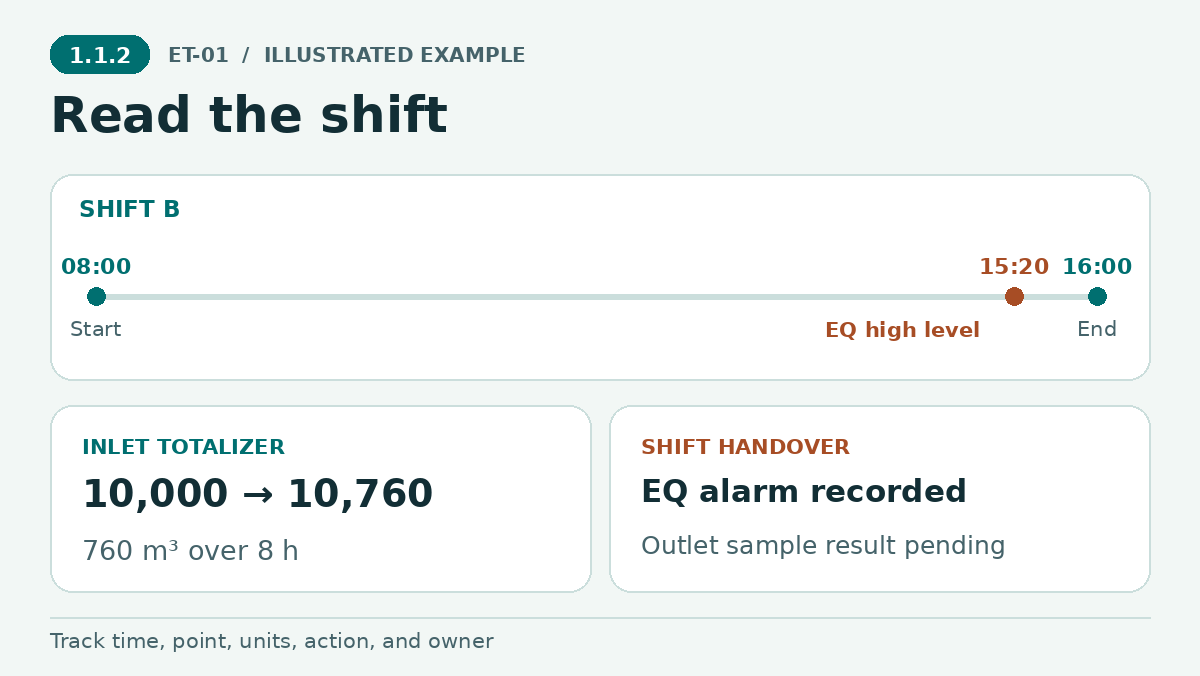
    Shift B timeline from 08:00 to 16:00 with a high-level alarm at 15:20, a 760 cubic meter inlet total, and a pending outlet sample.
    One timeline brings together the totalizer, the EQ alarm, and the pending sample.

    Read the plant in three moments

    • Start. Confirm the active train, duty and standby equipment, EQ level, open alarms, isolations, and pending tests.
    • During the shift. Log the time, point or asset ID, units, and what changed. Compare meter readings at the same point. Verify an unexpected reading before acting on it.
    • Handover. State what the team did, what remains open, who owns it, and when to check again. Keep the status of any hold or release decision explicit.

    A shift at ET-01

    The inlet totalizer moves from 10,000 to 10,760 m³ between 08:00 and 16:00. That is 760 m³ over 8 hours, or 95 m³/h on average. A separate final-outlet meter has its own record. At 15:20, the EQ high-level alarm appears. The operator records the alarm, verifies the available buffer through the site procedure, and alerts the shift lead. The outlet sample result is still pending at handover. Those two facts belong on separate lines so the next shift can follow each one.

    ‹ Previous lesson · Chapter contents · Next lesson ›

  • ১.৪.১ এয়ারেশন ও স্লাজ সেটলিং

    Read in English

    ডিজলভড অক্সিজেন (DO) কমলে বা ক্ল্যারিফায়ার দিয়ে সলিডস চলে গেলে আগে রিডিং যাচাই করুন। এরপর এয়ার, ইনলেট লোড ও স্লাজের ট্রেন্ড একসঙ্গে পড়ুন। কারণ বের করতে সাধারণত একাধিক প্রমাণ লাগে।

    ১০ সেকেন্ডের অ্যানিমেশন। দুটি স্লাজ স্যাম্পলের সেটলিং দেখুন। ৩০ মিনিটের পর্যবেক্ষণ সংক্ষেপে দেখানো হয়েছে।

    কী বদলেছে দেখুন

    • এয়ার ও ডিমান্ড। DO প্রোব, এয়ার ডেলিভারি ও ডিস্ট্রিবিউশন এবং ইনলেট লোডের পরিবর্তন যাচাই করুন। ET-01-এ দেখানো এয়ারফ্লো স্থির থাকা অবস্থায় DO ২.২ থেকে ১.০ mg/L-এ নামে এবং COD লোড বাড়ে। বাস্তব এয়ার ডেলিভারি ও বাড়তি ডিমান্ড দুটোই যাচাই করুন।
    • সেটলিং ও সেপারেশন। সেটলিং কার্ভ, ব্ল্যাঙ্কেট, ইনলেট ফ্লো, রিটার্ন ও ওয়েস্ট স্লাজ এবং আউটলেট সলিডস দেখুন। ধীর সেটলিং, সূক্ষ্ম ফ্লক, হাইড্রোলিক ক্যারিওভার ও সেটল করার পর স্লাজ ভেসে ওঠার লক্ষণ আলাদা।

    দুই সিলিন্ডারের রিডিং

    SV30 হলো ৩০ মিনিট পর সেটল হওয়া স্লাজের ভলিউম। এটি মিক্সড লিকার সাসপেন্ডেড সলিডস (MLSS), g/L, দিয়ে ভাগ করলে স্লাজ ভলিউম ইনডেক্স (SVI) পাওয়া যায়। ET-01-এ ২৮০ ÷ ২.৮ = ১০০ mL/g থেকে ৪৮০ ÷ ২.৯ ≈ ১৬৬ mL/g হয়েছে। বেশি SVI ও উঁচু ব্ল্যাঙ্কেট সলিডস সেপারেশন সমস্যার ইঙ্গিত দেয়। তুলনীয় স্যাম্পল দেখে কারণ অনুসন্ধান করুন। ডিসচার্জে ঝুঁকি থাকলে অনুমোদিত রেসপন্স অনুসরণ করুন এবং হোল্ডিংয়ের খালি ধারণক্ষমতা যাচাই করুন।

    আরও পড়ুন · Ohio EPA অ্যাক্টিভেটেড স্লাজ ট্রাবলশুটিং গাইড

    ‹ আগের লেসন · অধ্যায়ের সূচি · পরের লেসন ›

  • 1.4.1 Aeration and Sludge Settling

    বাংলায় পড়ুন

    When dissolved oxygen (DO) falls or the clarifier starts to carry solids, first verify the reading. Then read the air, incoming load, and sludge trends together. A single number rarely identifies the cause.

    10-second illustration. Watch two sludge samples settle. The clip compresses the 30-minute observation.

    See what changed

    • Air and demand. Verify the DO probe, air delivery and distribution, and recent changes in incoming load. At ET-01, DO drops from 2.2 to 1.0 mg/L while indicated airflow stays steady and COD load increases. Both real air delivery and increased demand deserve a check.
    • Settling and separation. Look at the settling curve, blanket depth, influent flow, return and waste sludge, and the outlet solids. Slow settling, fine floc, hydraulic carryover, and sludge that settles and later floats leave different clues.

    Read two cylinders

    SV30 is settled sludge volume after 30 minutes. Divide it by mixed liquor suspended solids (MLSS) in g/L to estimate the sludge volume index (SVI). ET-01 changes from 280 ÷ 2.8 = 100 mL/g to 480 ÷ 2.9 ≈ 166 mL/g. The larger value and a rising blanket support a solids-separation problem. Compare similar samples and investigate the cause before changing settings. For a discharge at risk, use the authorized response and verify that any available holding capacity is adequate.

    Further reading · Ohio EPA activated sludge troubleshooting guide

    ‹ Previous lesson · Chapter contents · Next lesson ›

  • ১.৩.১ প্লান্ট ওয়াকথ্রু ও ইনস্পেকশন রেকর্ড

    Read in English

    প্লান্টে হাঁটলে বোঝা যায় কোথায় ডায়াগ্রাম, ইকুইপমেন্ট ও লগের মধ্যে গরমিল আছে। বর্তমান ফ্লো ডায়াগ্রাম সঙ্গে নিয়ে নিরাপদ অ্যাক্সেস পয়েন্ট থেকে শুরু করুন। যা যাচাই করা যায় লিখুন এবং কোথায় আরও প্রমাণ দরকার চিহ্নিত করুন।

    আউটলেট মিটারে ৭৬০ m³, শিফট লগে ৭০৬ m³ এবং যাচাইয়ের জন্য ৫৪ m³ গরমিল।
    মিটার ও শিফট লগে ভলিউম আলাদা। দুটো রেকর্ডই রেখে গরমিলের সূত্র খুঁজুন।

    রুট ও রেকর্ড মিলিয়ে দেখুন

    • ইনলেট ও EQ। কানেকশন, ট্যাংক লেভেল ও অনুমোদিত ওভারফ্লো বা হোল্ডিং রুট মিলিয়ে নিন। অপরিচিত কানেকশন যাচাইয়ের জন্য চিহ্নিত করুন।
    • ট্রিটমেন্ট ও স্লাজ। চালু ট্রেন, অ্যালার্ম, স্ট্যান্ডবাই প্রস্তুতি ও স্লাজ হ্যান্ডলিং রুট দেখুন। পর্যবেক্ষণের সঙ্গে অ্যাসেট ট্যাগ ও সময়সহ রেকর্ড মিলিয়ে নিন।
    • ফাইনাল আউটলেট। নির্ধারিত পয়েন্ট, রুট, মিটার আইডি, একক ও স্যাম্পলিং রেকর্ড যাচাই করুন। বাংলাদেশে প্রযোজ্য পরিবেশ সংরক্ষণ বিধিমালা, ২০২৩, বর্তমান নির্দেশনা এবং সাইটের পরিবেশগত ছাড়পত্র ও অনুমোদন দেখুন। ডিসচার্জ ও ট্রিটমেন্টের শর্ত বুঝতে বিধি ৩২ ও ৩৩ এবং প্রাসঙ্গিক তফসিল দিয়ে শুরু করুন।

    একটি গরমিলের সূত্র

    ET-01-এর ফাইনাল আউটলেট মিটার FM-301 শিফটে ১৪,১০০ থেকে ১৪,৮৬০ m³ হয়েছে। মিটারের পার্থক্য ৭৬০ m³। শিফট লগে ৭০৬ m³, গরমিল ৫৪ m³। দুই রেকর্ডই রাখুন। মিটার আইডি, সময়সীমা, একক, রিসেট হিস্ট্রি ও মূল এন্ট্রি যাচাই করুন। সংশোধন দরকার হলে পরিবর্তনের রেকর্ড রেখে পরের শিফটের এন্ট্রি মিটারের সঙ্গে মিলিয়ে দেখুন।

    আরও পড়ুন · বাংলাদেশ গেজেট, পরিবেশ সংরক্ষণ বিধিমালা, ২০২৩

    ‹ আগের লেসন · অধ্যায়ের সূচি · পরের লেসন ›

  • 1.3.1 Plant Walkthrough and Inspection Records

    বাংলায় পড়ুন

    A walk through the plant can reveal where the drawing, the equipment, and the log tell different stories. Start from safe access points with the current flow diagram. Trace what you can verify, and record where you need more evidence.

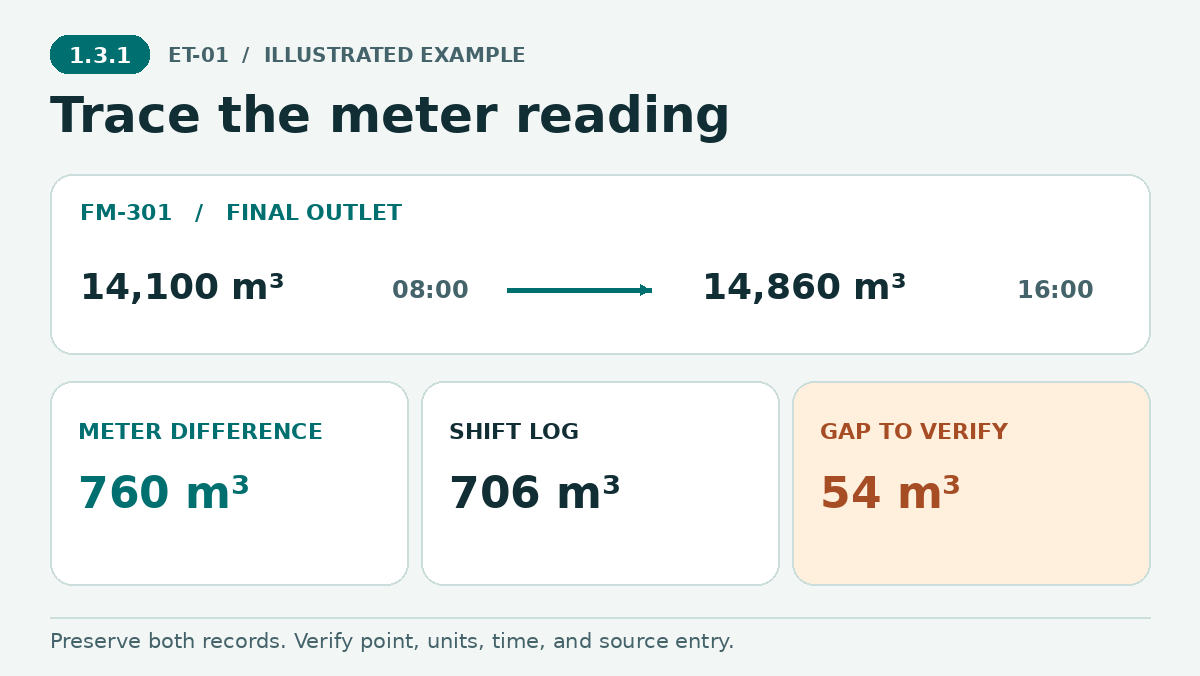
    Outlet meter readings give a difference of 760 cubic meters. The shift log shows 706, leaving 54 to reconcile.
    The meter and the shift log give different volumes. Preserve both and trace the gap.

    Follow the route and the records

    • Inlet and EQ. Confirm the connected lines, tank level, and approved overflow or holding route. Mark unfamiliar connections for verification.
    • Treatment and sludge. Check the active train, alarms, standby readiness, and the sludge handling route. Match the observations to equipment tags and time-stamped records.
    • Final outlet. Confirm the designated point, route, meter ID, units, and sampling record. In Bangladesh, check the applicable Environment Conservation Rules, 2023, current directions, and the site’s environmental clearance and approvals. Rules 32 and 33 and the relevant schedules provide the starting point for the discharge and treatment requirements.

    A discrepancy worth following

    At ET-01, final-outlet meter FM-301 rises from 14,100 to 14,860 m³ over the shift. The meter difference is 760 m³. The shift log says 706 m³, leaving a 54 m³ gap. Keep both records. Check the meter ID, time interval, units, reset history, and original entry. If the entry needs correction, retain the change trail and compare the next shift’s record with the meter.

    Further reading · Bangladesh Gazette, Environment Conservation Rules, 2023

    ‹ Previous lesson · Chapter contents · Next lesson ›

  • ১.২.১ পাম্প, ব্লোয়ার ও ডোজিং সিস্টেম

    Read in English

    প্লান্টের রিডিং বদলালে আগে দেখুন ইকুইপমেন্ট বাস্তবে কী সরবরাহ করছে। অ্যাসেট ট্যাগ, নির্ধারিত ডিউটি, স্বাভাবিক রিডিং, স্ট্যান্ডবাই ও অপারেটিং ম্যানুয়াল সহজে পাওয়ার মতো করে রাখুন। জানা অবস্থায় নেওয়া বেসলাইন থাকলে নতুন রিডিং তুলনা করা যায়।

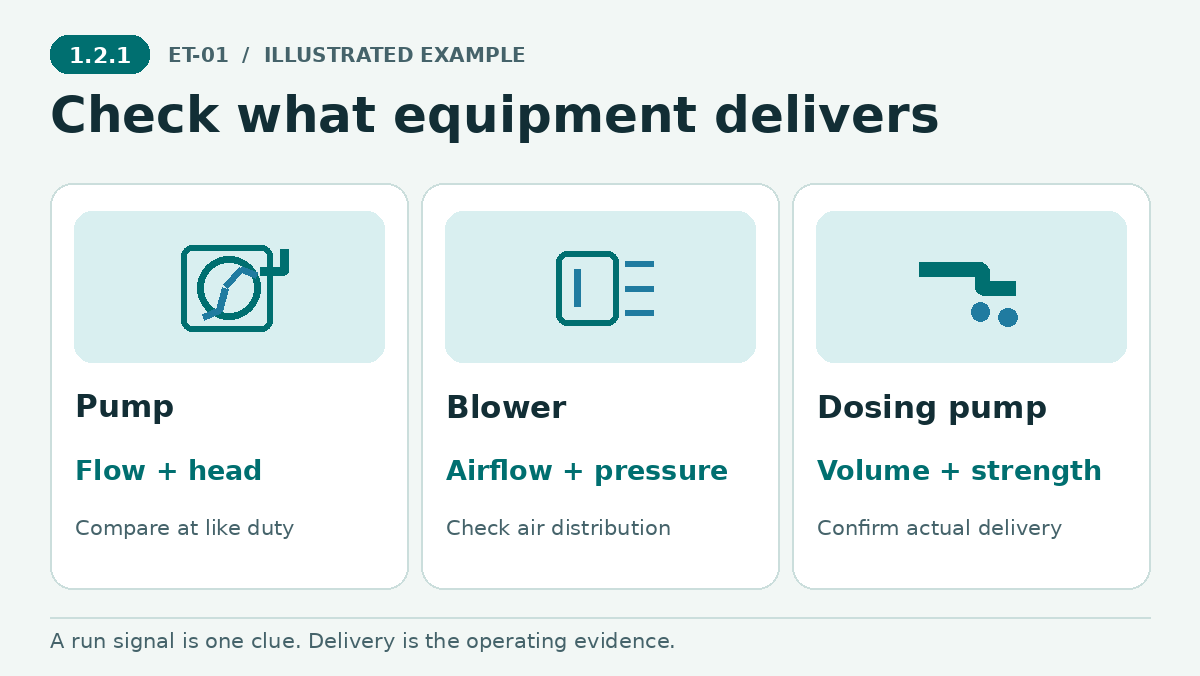
    পাম্প, ব্লোয়ার ও ডোজিং পাম্পের ডেলিভারি যাচাইয়ের প্রাসঙ্গিক রিডিং।
    ফ্লোর সঙ্গে হেড, এয়ারফ্লোর সঙ্গে প্রেশার এবং ডোজিং ভলিউমের সঙ্গে সলিউশন স্ট্রেংথ দেখুন।

    তিন ধরনের প্রমাণ

    • ট্রান্সফার পাম্প। তুলনীয় ডিউটিতে ফ্লো ও ডিফারেনশিয়াল হেড মিলিয়ে দেখুন। ফ্লো কমলে মিটার, লাইনআপ, সাকশন কন্ডিশন এবং শব্দ, ভাইব্রেশন বা কারেন্টের মতো প্রাসঙ্গিক লক্ষণ যাচাই করুন।
    • ব্লোয়ার। বাস্তব এয়ারফ্লো, হেডার প্রেশার ও ডিস্ট্রিবিউশন একসঙ্গে দেখুন। প্রেশার বেড়ে এয়ারফ্লো কমলে রেস্ট্রিকশন থাকতে পারে। ত্রুটি নির্ধারণের আগে এয়ার সিস্টেমে কী বদলেছে, যাচাই করুন।
    • ডোজিং পাম্প। অনুমোদিত টেস্ট ও কেমিক্যাল হ্যান্ডলিং প্রসিডিউরে ডেলিভারি রেট ও সলিউশনের স্ট্রেংথ যাচাই করুন। অ্যাক্টিভ কেমিক্যালের পরিমাণ দুটির ওপর নির্ভর করে।

    তুলনা করার মতো ট্রেন্ড রাখুন

    রিডিংয়ের পাশে অপারেটিং কন্ডিশন লিখুন। একই স্পিড ও কাছাকাছি এয়ার সিস্টেম সেটিংয়ে ব্লোয়ার তুলনা করুন। কাছাকাছি হেডে পাম্প তুলনা করুন। প্রস্তুতকারকের নির্দেশনা, ঝুঁকি ও সার্ভিস হিস্ট্রি থেকে চেকের বিরতি ঠিক করুন। সাইট প্ল্যানে বাস্তবসম্মত স্ট্যান্ডবাই টেস্ট রাখুন। কয়েকটি তুলনীয় রাউন্ডের পরিবর্তন মেইনটেন্যান্স টিমকে সমস্যার উৎস খুঁজতে সাহায্য করে।

    আরও পড়ুন · ইউএস ডিপার্টমেন্ট অব এনার্জির পাম্পিং সিস্টেম গাইড

    ‹ আগের লেসন · অধ্যায়ের সূচি · পরের লেসন ›