When a plant reading changes, start by checking what the equipment actually delivers. Keep a simple asset record with the tag, required duty, normal readings, standby arrangement, and operating manual. A baseline taken under known conditions gives each new reading something useful to compare with.
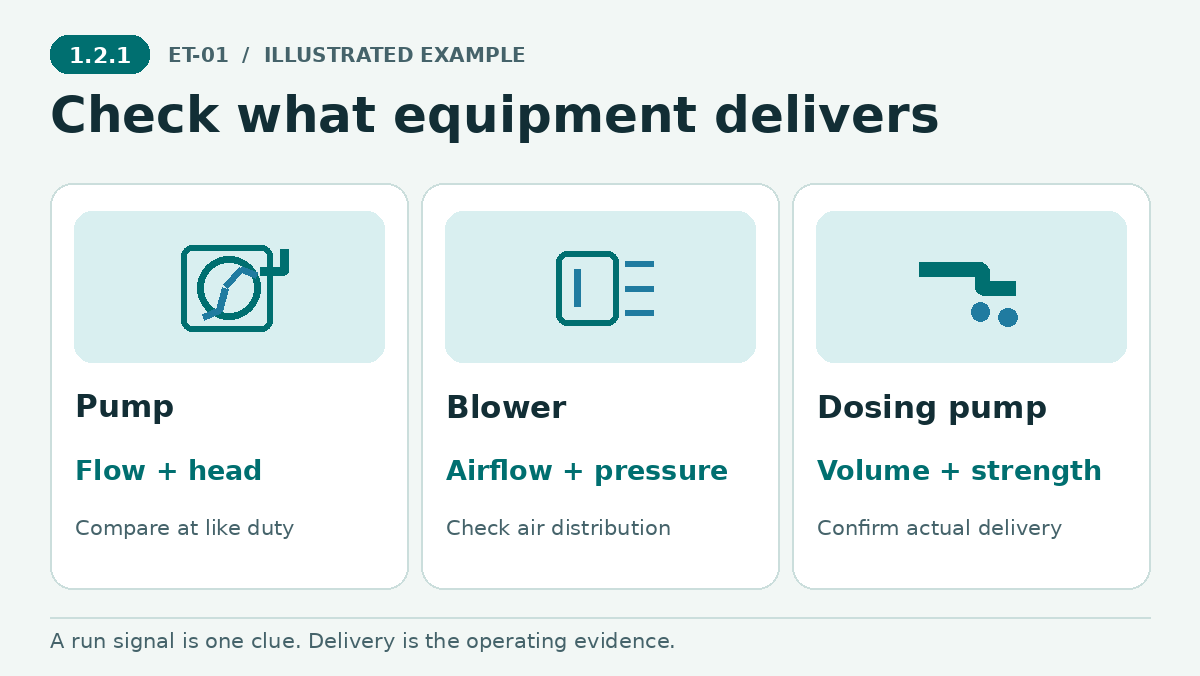
Three pieces of evidence
- Transfer pump. Compare flow and differential head at comparable duty. If flow falls, check meter validity, the lineup, suction conditions, and any other clues such as noise, vibration, or current.
- Blower. Look at delivered airflow, header pressure, and distribution together. Higher pressure with lower airflow can point toward a restriction, but confirm what changed in the air system before naming a fault.
- Dosing pump. Check the delivery rate and solution strength using the authorized test and chemical-handling procedure. The quantity of active chemical depends on both.
Build a useful trend
Record operating conditions alongside each reading. Compare a blower at the same speed and similar air-system settings. Compare a pump at similar head. Plan the check interval from the manufacturer’s guidance, operating risk, and service history. Include a representative standby test in the site plan. A measured change over several comparable rounds gives maintenance a clearer starting point than an isolated alarm.
Further reading · U.S. Department of Energy pumping systems guide
Leave a Reply