A walk through the plant can reveal where the drawing, the equipment, and the log tell different stories. Start from safe access points with the current flow diagram. Trace what you can verify, and record where you need more evidence.
Follow the route and the records
- Inlet and EQ. Confirm the connected lines, tank level, and approved overflow or holding route. Mark unfamiliar connections for verification.
- Treatment and sludge. Check the active train, alarms, standby readiness, and the sludge handling route. Match the observations to equipment tags and time-stamped records.
- Final outlet. Confirm the designated point, route, meter ID, units, and sampling record. In Bangladesh, check the applicable Environment Conservation Rules, 2023, current directions, and the site’s environmental clearance and approvals. Rules 32 and 33 and the relevant schedules provide the starting point for the discharge and treatment requirements.
A discrepancy worth following
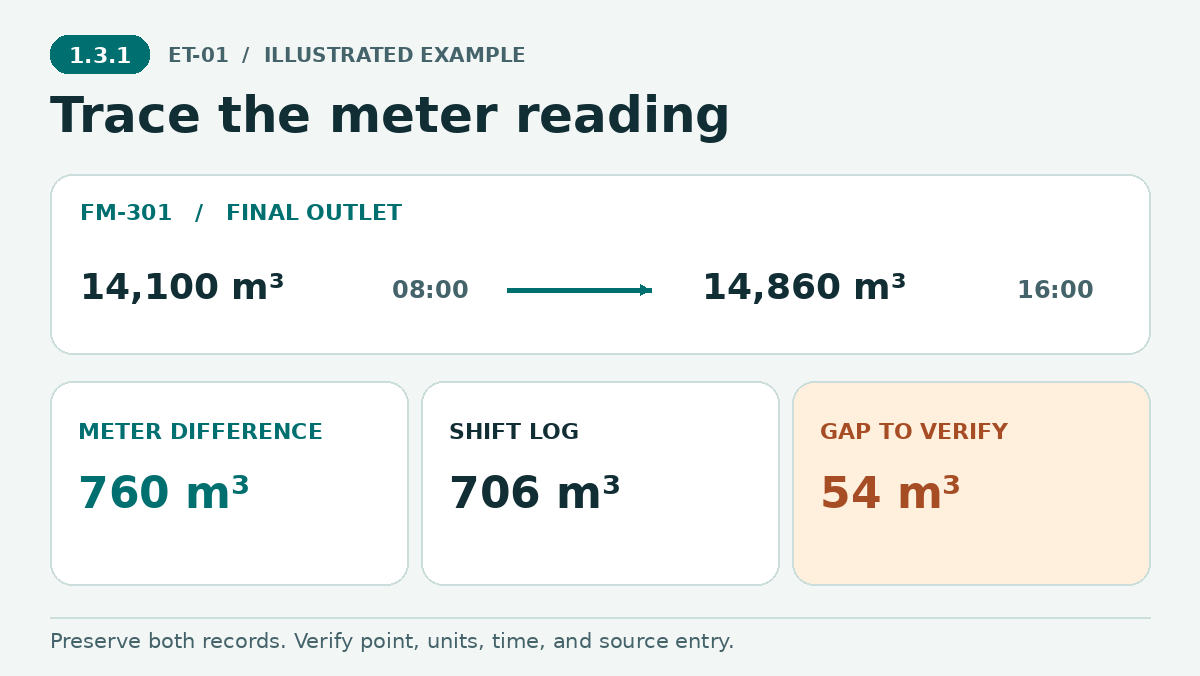
At ET-01, final-outlet meter FM-301 rises from 14,100 to 14,860 m³ over the shift. The meter difference is 760 m³. The shift log says 706 m³, leaving a 54 m³ gap. Keep both records. Check the meter ID, time interval, units, reset history, and original entry. If the entry needs correction, retain the change trail and compare the next shift’s record with the meter.
Further reading · Bangladesh Gazette, Environment Conservation Rules, 2023
Leave a Reply