Author: ArifAnwar

  • ১.৪.২ COD, কালার ও জার টেস্ট

    Read in English

    বেশি COD ও আউটলেটের গাঢ় কালার ভিন্ন সমস্যার ইঙ্গিত দিতে পারে। ডোজ বদলানোর আগে পরিবর্তনের উৎস আপস্ট্রিমে খুঁজুন এবং একই ভিত্তিতে করা টেস্টগুলো তুলনা করুন।

    ১০ সেকেন্ডের অ্যানিমেশন। সেটলিংয়ের সময় আনট্রিটেড কন্ট্রোল ও উদাহরণের দুটি ট্রায়াল তুলনা করুন।

    COD কী কারণে বেড়েছে দেখুন

    ET-01-এ আউটলেট টোটাল COD ৮৪ থেকে ১৫৫ mg/L এবং টোটাল সাসপেন্ডেড সলিডস (TSS) ২৪ থেকে ৭৮ mg/L হয়েছে। ফিল্টারড COD ৬০ থেকে ৬৩ mg/L। এই পরিবর্তন টোটাল COD বৃদ্ধিতে সলিডস ক্যারিওভারের ভূমিকা সমর্থন করে। স্যাম্পল তুলনীয় কি না যাচাই করে সেটলিং ও সলিডসের পথ দেখুন।

    জার টেস্টে কালার ট্রিটমেন্ট তুলনা করুন

    কালার বদলালে প্রোডাকশন ব্যাচ, EQ-তে পৌঁছানোর সময়, pH, মিক্সিং ও বাস্তব কেমিক্যাল ডেলিভারি দেখুন। তত্ত্বাবধানে জার টেস্টে প্রতিনিধিত্বশীল স্যাম্পলের আনট্রিটেড কন্ট্রোল ও অনুমোদিত ট্রায়ালগুলো একই অবস্থায় তুলনা করা হয়। পদ্ধতি, pH, অবশিষ্ট কালার, সেটলিং ও উৎপন্ন স্লাজ লিখুন। সবচেয়ে স্বচ্ছ দেখানো জার একটি পর্যবেক্ষণ। সিদ্ধান্তে মাপা পানির মান, স্লাজ হ্যান্ডলিং ও অনুমোদিত সাইট প্রসিডিউর বিবেচনা করুন। অ্যানিমেশনে সেটলিংয়ের পর জারগুলোর তুলনা দেখানো হয়েছে।

    আরও পড়ুন · IFC টেক্সটাইল ওয়েস্টওয়াটার গাইডলাইন

    ‹ আগের লেসন · অধ্যায়ের সূচি · পরের লেসন ›

    প্র্যাকটিস ডাউনলোড

    দ্বিভাষিক PDF ওয়ার্কশিট প্রিন্ট করে বা সম্পাদনাযোগ্য এক্সেলের সঙ্গে ব্যবহার করুন। উদাহরণগুলো শেখার জন্য; সাইটের অনুমোদিত প্রসিডিউর ও প্রয়োজন অনুযায়ী রেকর্ড সাজান।

    হোমপেজে ফিরুন · প্র্যাকটিস রিসোর্স

  • 1.4.2 COD, Color, and Jar Testing

    বাংলা সংস্করণ পড়ুন

    A high COD result and a darker outlet can point to different treatment problems. Trace the change upstream and compare tests made on the same basis before adjusting a dose.

    10-second illustration. Compare the untreated control and two illustrative trials as they settle.

    Find what is driving the COD result

    At ET-01, total outlet COD increases from 84 to 155 mg/L and total suspended solids (TSS) rise from 24 to 78 mg/L. Filtered COD changes from 60 to 63 mg/L. That pattern supports solids carryover as an important contributor to the total COD rise. Verify sample comparability, then check settling and the solids path.

    Use a jar test to compare color treatment

    For a color shift, check the production batch, EQ timing, pH, mixing, and actual chemical delivery. A supervised jar test compares a representative sample with an untreated control and approved trials under matched conditions. Record the method, pH, residual color, settling behavior, and sludge produced. The clearest-looking jar is one observation. A decision also uses measured quality, sludge handling, and the site’s approved operating procedure. The animation shows an illustrative comparison of jars after settling.

    Further reading · IFC textile wastewater guidance

    ‹ Previous lesson · Chapter contents · Next lesson ›

    Practice downloads

    Use the bilingual PDF worksheets in print or alongside the editable Excel files. Examples are for learning; adapt the records to the approved procedures and requirements at your site.

    Back to Home

  • ১.৩.২ এফ্লুয়েন্ট স্যাম্পলিং

    Read in English

    ল্যাব ফল কাজে লাগে যখন জানা যায় কোন পয়েন্টে, কখন এবং কোন পদ্ধতিতে পানি নেওয়া হয়েছিল। স্যাম্পল পয়েন্ট ছাড়ার আগেই স্যাম্পলের আইডি দিন।

    ১০ সেকেন্ডের অ্যানিমেশন। সংগ্রহের পয়েন্ট থেকে মিলযুক্ত ল্যাব রিপোর্ট পর্যন্ত O-16 স্যাম্পলের পথ দেখুন।

    সিদ্ধান্ত অনুযায়ী স্যাম্পল নিন

    গ্র্যাব স্যাম্পল নির্দিষ্ট সময় ও পয়েন্টের অবস্থা দেখায়। কম্পোজিট স্যাম্পলে সময় বা ফ্লো অনুযায়ী একাধিক অংশ মেশানো হয়। পদ্ধতি ও অ্যানালাইট উপযোগী হলে ইন্টারনাল লোড অনুমানে এটি কাজে লাগে। রেগুলেটরি ডিসচার্জ পরীক্ষায় প্রযোজ্য বিধান ও সাইটের অনুমোদিত প্ল্যান অনুসরণ করুন। বাংলাদেশের পরিবেশ সংরক্ষণ বিধিমালা, ২০২৩-এর তফসিল ১২-তে বর্ণিত প্রযোজ্য ডিসচার্জ পরীক্ষার জন্য গ্র্যাব স্যাম্পলিং নির্ধারিত আছে।

    নিরাপদ ও অনুমোদিত অ্যাক্সেস ব্যবহার করুন। বোতল, ফিল্ড রিডিং, প্রিজারভেশন, পরিবহন ও হোল্ডিং টাইমের জন্য ল্যাবের নির্দেশনা অনুসরণ করুন। সংগ্রহকারী, স্যাম্পল পয়েন্ট ও আইডি, তারিখ-সময়, প্রসেস কন্ডিশন এবং প্রতিটি হ্যান্ডওভার লিখুন। রিপোর্টে একই আইডি, পদ্ধতি, একক এবং সিদ্ধান্তের উপযোগী রিপোর্টিং লিমিট যাচাই করুন।

    একটি স্যাম্পলের পথ

    ET-01-এ SP-301 পয়েন্টে ১৬:০০-এ O-16 গ্র্যাব স্যাম্পল রেকর্ড করা হলো। হ্যান্ডওভারে ফল অপেক্ষমাণ। রিপোর্ট এলে O-16-এর সঙ্গে মিলিয়ে পদ্ধতি ও একক যাচাই করুন, তারপর প্রযোজ্য শর্তের সঙ্গে তুলনা করুন। ফল বা স্যাম্পল রেকর্ডে ব্যবস্থা প্রয়োজন হলে সাইটের এসকেলেশন ও রিলিজ প্রসিডিউর অনুসরণ করুন।

    আরও পড়ুন · বাংলাদেশ গেজেট, পরিবেশ সংরক্ষণ বিধিমালা, ২০২৩

    ‹ আগের লেসন · অধ্যায়ের সূচি · পরের লেসন ›

    প্র্যাকটিস ডাউনলোড

    দ্বিভাষিক PDF ওয়ার্কশিট প্রিন্ট করে বা সম্পাদনাযোগ্য এক্সেলের সঙ্গে ব্যবহার করুন। উদাহরণগুলো শেখার জন্য; সাইটের অনুমোদিত প্রসিডিউর ও প্রয়োজন অনুযায়ী রেকর্ড সাজান।

    এফ্লুয়েন্ট স্যাম্পলিং, মনিটরিং ও ল্যাবরেটরি QA/QC

    হোমপেজে ফিরুন

  • 1.3.2 Effluent Sampling

    বাংলা সংস্করণ পড়ুন

    A lab result is useful when you can trace it back to the right water, at the right time, by the required method. Give the sample an identity before it leaves the sampling point.

    10-second illustration. Follow sample O-16 from its collection point to the matching lab report.

    Match the sample to the decision

    A grab sample describes a particular time and point. A composite sample combines increments over a time or flow period and can help estimate an internal load where the method and analyte allow it. For regulated discharge testing, follow the applicable requirements and the site’s approved plan. Schedule 12 of Bangladesh’s Environment Conservation Rules, 2023 specifies grab sampling for the applicable discharge testing described there.

    Use approved safe access. Follow the laboratory instructions for the bottle, field readings, preservation, transport, and holding time. Record the collector, sample point and ID, date and time, process conditions, and each handoff. Check the lab report for the same ID, method, units, and a reporting limit suitable for the decision.

    Follow one sample

    ET-01 records O-16 as a grab sample taken at SP-301 at 16:00. The handover shows the result as pending. When the lab report arrives, match it to O-16, check the method and units, and compare it with the applicable criterion. Use the site’s escalation and release procedure if the result or sample record calls for action.

    Further reading · Bangladesh Gazette, Environment Conservation Rules, 2023

    ‹ Previous lesson · Chapter contents · Next lesson ›

    Practice downloads

    Use the bilingual PDF worksheets in print or alongside the editable Excel files. Examples are for learning; adapt the records to the approved procedures and requirements at your site.

    Effluent Sampling, Monitoring and Laboratory QA/QC

    Back to Home

  • ১.২.২ নিরাপদ আইসোলেশন ও পুনরায় চালু

    Read in English

    স্ট্যান্ডবাই পাম্পে রান সিগন্যাল থাকলেও প্রয়োজনের চেয়ে কম পানি আসতে পারে। নিয়ন্ত্রিত টেস্টে নির্ধারিত ডিউটি পাওয়া গেলে এবং সাইটের প্রটেকশন সচল থাকলে মেরামত হ্যান্ডওভারের উপযোগী হয়।

    ১০ সেকেন্ডের অ্যানিমেশন। কাজের ক্রম এবং একই হেডে মেরামতের আগে ও পরের ফ্লো টেস্ট দেখুন।

    সাইটের কাজের ক্রম অনুসরণ করুন

    1. সমন্বয়। আউটেজ, ট্রিটমেন্ট চালু রাখার ব্যবস্থা, পারমিট ও দায়িত্ব নিয়ে অপারেশন ও মেইনটেন্যান্স একমত হয়।
    2. আইসোলেশন ও ভেরিফিকেশন। অনুমোদিত কর্মীরা সাইটের হ্যাজার্ডাস এনার্জি প্রসিডিউর প্রয়োগ করে আইসোলেশন ও স্টোরড এনার্জি নিয়ন্ত্রণ যাচাই করেন। স্টপ কমান্ড শুধু অপারেটিং স্ট্যাটাস জানায়। ট্যাংক ও পিটে অ্যাক্সেসের জন্য সাইটের কনফাইন্ড স্পেস প্রোগ্রাম অনুসরণ করুন।
    3. পুনরায় চালু ও টেস্ট। অনুমোদিত কর্মীরা কাজের জায়গা খালি করেন, সেফগার্ড ফেরান এবং অনুমোদিত রিটার্ন-টু-সার্ভিস টেস্ট করেন। কাজের আগে ও পরের রিডিং এবং অপারেশন হ্যান্ডওভার লিখুন।

    একটি পাম্প, দুটি রিডিং

    ET-01-এর উদাহরণে প্রায় ২২ m হেডে টেস্ট ব্যান্ড ৭৬–৮৪ m³/h। কাজের আগে P-102B একই হেডে ৫২ m³/h দিয়েছে। ওই ডিউটির জন্য পাম্পটি অনুপলব্ধ হিসেবে রেকর্ড হয়। সাকশন রেস্ট্রিকশন অনুমোদিত পদ্ধতিতে ঠিক করার পর একই হেডে ৭৯ m³/h পাওয়া গেল। ফ্লো শর্ত পূরণ হয়েছে। দায়িত্বপ্রাপ্ত ব্যক্তি সাইন-অফ দেওয়ার আগে বাকি শর্ত ও প্রটেকশন যাচাই করেন।

    আরও পড়ুন · হ্যাজার্ডাস এনার্জি কন্ট্রোলের OSHA টেকনিক্যাল রেফারেন্স

    ‹ আগের লেসন · অধ্যায়ের সূচি · পরের লেসন ›

    প্র্যাকটিস ডাউনলোড

    দ্বিভাষিক PDF ওয়ার্কশিট প্রিন্ট করে বা সম্পাদনাযোগ্য এক্সেলের সঙ্গে ব্যবহার করুন। উদাহরণগুলো শেখার জন্য; সাইটের অনুমোদিত প্রসিডিউর ও প্রয়োজন অনুযায়ী রেকর্ড সাজান।

    ETP, STP ও WTP-তে হেলথ অ্যান্ড সেফটি · ওয়াটার ও ওয়েস্টওয়াটার ট্রিটমেন্ট প্লান্টের HIRA

    হোমপেজে ফিরুন · প্র্যাকটিস রিসোর্স

  • 1.2.2 Safe Isolation and Return to Service

    বাংলা সংস্করণ পড়ুন

    A standby pump can show a run signal and still deliver too little water. The repair is ready for handover when it can meet its duty under a controlled test and the site’s protections are available.

    10-second illustration. See the work sequence and the example before-and-after flow test at the same head.

    Follow the site work sequence

    1. Coordinate. Operations and maintenance agree on the outage, treatment continuity, permit, and responsible people.
    2. Isolate and verify. Authorized staff apply the site’s hazardous-energy procedure and verify isolation and stored-energy control. A stop command provides only operating status. Treat tank and pit access under the site’s confined-space program.
    3. Restore and test. Authorized staff clear the work area, restore safeguards, and follow the approved return-to-service test. Record the before and after readings and the operations handover.

    One pump, two readings

    ET-01’s example test band is 76–84 m³/h at approximately 22 m head. Pump P-102B gives 52 m³/h at 22 m before the work, so it is recorded as unavailable for that duty. After an authorized correction to a suction restriction, it gives 79 m³/h at the same head. That meets the example flow criterion. The team verifies the remaining conditions and protections before the responsible person signs off.

    Further reading · OSHA technical reference on hazardous-energy control

    ‹ Previous lesson · Chapter contents · Next lesson ›

    Practice downloads

    Use the bilingual PDF worksheets in print or alongside the editable Excel files. Examples are for learning; adapt the records to the approved procedures and requirements at your site.

    Health and Safety in ETP, STP and WTP · HIRA for Water and Wastewater Treatment Plants

    Back to Home

  • ১.১.৩ COD লোড ও ইকুয়ালাইজেশন

    Read in English

    কেমিক্যাল অক্সিজেন ডিমান্ড (COD) হলো নির্ধারিত টেস্টে অক্সিডাইজ হওয়া পদার্থের অক্সিজেন-সমতুল্য পরিমাপ। COD কনসেনট্রেশন থেকে ওয়েস্টওয়াটারে দূষণের মাত্রা সম্পর্কে ধারণা পাওয়া যায়। লোড থেকে বোঝা যায়, একটি নির্দিষ্ট সময়ে প্লান্টে কত COD এসেছে।

    ১০ সেকেন্ডের অ্যানিমেশন। দুটি ৮ ঘণ্টার শিফটে কীভাবে মোট ১,১০৪ kg COD লোড আসে, দেখুন।

    কনসেনট্রেশন থেকে লোড হিসাব

    COD ম্যাস (kg) = ভলিউম (m³) × প্রতিনিধিত্বশীল COD (mg/L) ÷ ১,০০০। একই সময়সীমার কনসেনট্রেশন ও ভলিউম ব্যবহার করুন। ব্যাচ ডিসচার্জের সময় নেওয়া গ্র্যাব স্যাম্পল ওই মুহূর্তের অবস্থা দেখায়। পুরো সময়ের লোড অনুমানে উপযুক্ত প্রতিনিধিত্বশীল স্যাম্পল প্রয়োজন।

    • শিফট A। ৬০০ m³ × ৭০০ mg/L ÷ ১,০০০ = ৮ ঘণ্টায় ৪২০ kg।
    • শিফট B। ৭৬০ m³ × ৯০০ mg/L ÷ ১,০০০ = ৮ ঘণ্টায় ৬৮৪ kg।
    • দুই শিফট। ১৬ ঘণ্টায় ১,৩৬০ m³ পানিতে ১,১০৪ kg। ফ্লো-ওয়েটেড COD প্রায় ৮১২ mg/L।

    EQ দিয়ে পরের কয়েক ঘণ্টা বুঝুন

    ধারণক্ষমতা ও মিক্সিং থাকলে EQ প্রোডাকশনের শক লোডকে সময়ের সঙ্গে ছড়িয়ে দিতে পারে। ET-01-এ অপারেটিং পানির ভলিউম ১৮০ m³ ও স্থির ফ্লো ৭৫ m³/h হলে নমিনাল রিটেনশন টাইম ২.৪ h। বাস্তব রিটেনশন প্রবাহের ধরন ও লেভেল পরিবর্তনের ওপর নির্ভর করে। ট্যাংক বাড়তি কত পানি নিতে পারবে, তা বুঝতে খালি ব্যবহারযোগ্য ভলিউম ও নেট ফিলিং রেট দেখুন। এটি রিটেনশন টাইম থেকে আলাদা হিসাব। বড় ডিসচার্জের আগে প্রোডাকশন টিম জানালে অপারেটর বাফার ব্যবহারের সময় পান।

    আরও পড়ুন · IFC টেক্সটাইল ওয়েস্টওয়াটার গাইডলাইন

    ‹ আগের লেসন · অধ্যায়ের সূচি · পরের লেসন ›

    প্র্যাকটিস ডাউনলোড

    দ্বিভাষিক PDF ওয়ার্কশিট প্রিন্ট করে বা সম্পাদনাযোগ্য এক্সেলের সঙ্গে ব্যবহার করুন। উদাহরণগুলো শেখার জন্য; সাইটের অনুমোদিত প্রসিডিউর ও প্রয়োজন অনুযায়ী রেকর্ড সাজান।

    হোমপেজে ফিরুন

  • 1.1.3 COD Load and Equalization

    বাংলা সংস্করণ পড়ুন

    Chemical oxygen demand (COD) is a measure of the oxygen equivalent of material oxidized by a specified test. COD concentration tells you how strong the wastewater is. The load tells you how much reaches the plant during a stated period.

    10-second illustration. See how the two 8-hour COD loads add up to 1,104 kg.

    Turn concentration into load

    COD mass (kg) = volume (m³) × representative COD (mg/L) ÷ 1,000. Match the concentration and volume to the same interval. A grab sample during a batch dump describes that moment. A suitable representative sample supports the interval estimate.

    • Shift A. 600 m³ × 700 mg/L ÷ 1,000 = 420 kg in 8 h.
    • Shift B. 760 m³ × 900 mg/L ÷ 1,000 = 684 kg in 8 h.
    • Both shifts. 1,104 kg in 1,360 m³ gives a flow-weighted COD of about 812 mg/L over 16 h.

    Use EQ to read the next few hours

    EQ can spread a production shock over time when capacity and mixing are available. At ET-01, 180 m³ of operating liquid volume at a steady 75 m³/h gives a nominal retention time of 2.4 h. Actual retention depends on the flow pattern and changing levels. To estimate how much extra water the tank can receive, check the free usable volume and the net filling rate. That is a separate calculation from retention time. A conversation with production before a large discharge gives the operator time to use the available buffer.

    Further reading · IFC textile wastewater guidance

    ‹ Previous lesson · Chapter contents · Next lesson ›

    Practice downloads

    Use the bilingual PDF worksheets in print or alongside the editable Excel files. Examples are for learning; adapt the records to the approved procedures and requirements at your site.

    Back to Home

  • ১.১.২ শিফট রাউন্ড ও ফ্লো রেকর্ড

    Read in English

    ভালো শিফট লগ দেখে পরের অপারেটর বুঝতে পারেন কী ঘটেছিল। আগের হ্যান্ডওভার পড়ে ইনলেট থেকে আউটলেট পর্যন্ত অনুমোদিত রুট দেখুন। কোন প্রোডাকশন ব্যাচ বা ক্লিনিং ডিসচার্জ সামনে আছে, জেনে নিন। এগুলো ইনলেট লোড বদলে দিতে পারে।

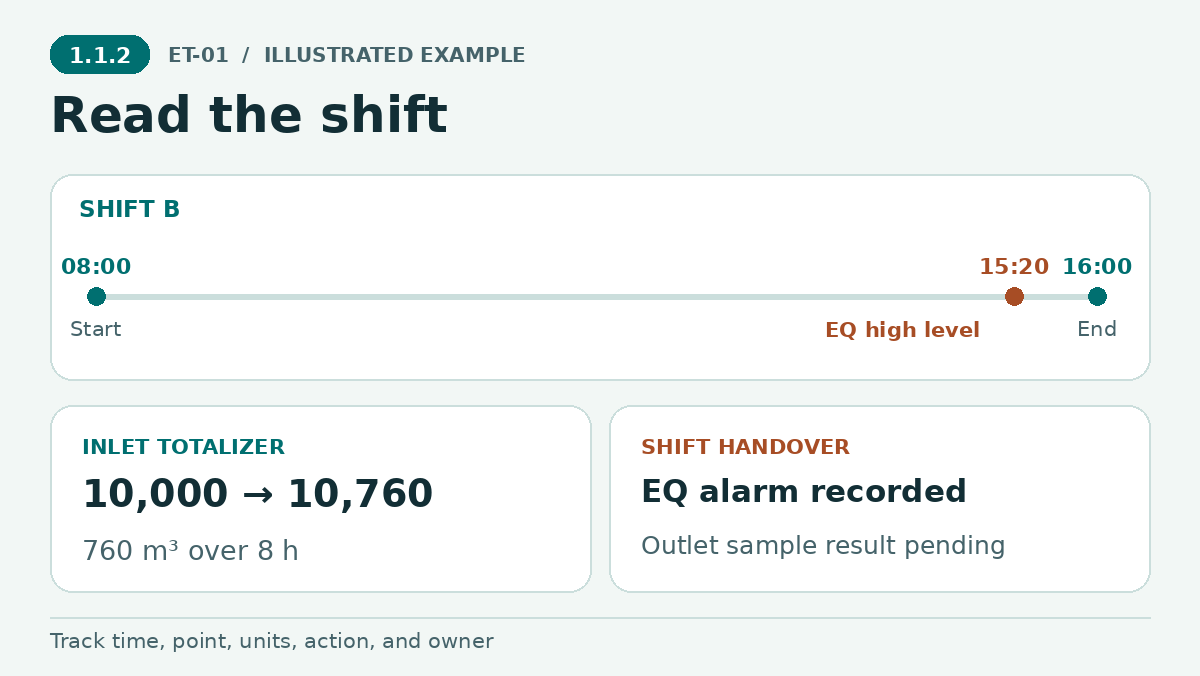
    শিফট B-এর টাইমলাইন, ১৫:২০-এর EQ অ্যালার্ম, ৭৬০ m³ ইনলেট ভলিউম ও অপেক্ষমাণ স্যাম্পল।
    একটি টাইমলাইনে টোটালাইজার, EQ অ্যালার্ম ও অপেক্ষমাণ স্যাম্পল।

    শিফটের তিন সময়ে কী দেখবেন

    • শুরুতে। চালু ট্রেন, ডিউটি ও স্ট্যান্ডবাই ইকুইপমেন্ট, EQ লেভেল, ওপেন অ্যালার্ম, আইসোলেশন এবং অপেক্ষমাণ টেস্ট মিলিয়ে নিন।
    • শিফট চলাকালে। সময়, পয়েন্ট বা অ্যাসেট আইডি, একক ও কী বদলেছে লিখুন। একই পয়েন্টের মিটার রিডিং তুলনা করুন। অপ্রত্যাশিত রিডিং পেলে ব্যবস্থা নেওয়ার আগে যাচাই করুন।
    • হ্যান্ডওভারে। কী করা হয়েছে, কী বাকি, দায়িত্বে কে এবং কখন আবার চেক করতে হবে লিখুন। হোল্ড বা রিলিজ সিদ্ধান্তের অবস্থা স্পষ্ট রাখুন।

    ET-01-এর একটি শিফট

    ০৮:০০ থেকে ১৬:০০-এর মধ্যে ইনলেট টোটালাইজার ১০,০০০ থেকে ১০,৭৬০ m³ হয়েছে। অর্থাৎ ৮ ঘণ্টায় ৭৬০ m³, গড়ে ৯৫ m³/h। ফাইনাল আউটলেট মিটারের রেকর্ড আলাদা। ১৫:২০-এ EQ হাই-লেভেল অ্যালার্ম আসে। অপারেটর অ্যালার্ম লিখে সাইট প্রসিডিউর অনুযায়ী খালি ধারণক্ষমতা যাচাই করেন এবং শিফট লিডকে জানান। হ্যান্ডওভারের সময় আউটলেট স্যাম্পলের ফল বাকি। তথ্য দুটি আলাদা লাইনে থাকলে পরের শিফট দুটিই অনুসরণ করতে পারে।

    ‹ আগের লেসন · অধ্যায়ের সূচি · পরের লেসন ›

    প্র্যাকটিস ডাউনলোড

    দ্বিভাষিক PDF ওয়ার্কশিট প্রিন্ট করে বা সম্পাদনাযোগ্য এক্সেলের সঙ্গে ব্যবহার করুন। উদাহরণগুলো শেখার জন্য; সাইটের অনুমোদিত প্রসিডিউর ও প্রয়োজন অনুযায়ী রেকর্ড সাজান।

    হোমপেজে ফিরুন

  • 1.1.2 Shift Rounds and Flow Records

    বাংলা সংস্করণ পড়ুন

    A useful shift log lets the next operator reconstruct what happened without guessing. Begin with the previous handover, then walk the approved route from the inlet to the outlet. Ask production about upcoming batches or cleaning discharges that could change the load.

    Shift B timeline from 08:00 to 16:00 with a high-level alarm at 15:20, a 760 cubic meter inlet total, and a pending outlet sample.
    One timeline brings together the totalizer, the EQ alarm, and the pending sample.

    Read the plant in three moments

    • Start. Confirm the active train, duty and standby equipment, EQ level, open alarms, isolations, and pending tests.
    • During the shift. Log the time, point or asset ID, units, and what changed. Compare meter readings at the same point. Verify an unexpected reading before acting on it.
    • Handover. State what the team did, what remains open, who owns it, and when to check again. Keep the status of any hold or release decision explicit.

    A shift at ET-01

    The inlet totalizer moves from 10,000 to 10,760 m³ between 08:00 and 16:00. That is 760 m³ over 8 hours, or 95 m³/h on average. A separate final-outlet meter has its own record. At 15:20, the EQ high-level alarm appears. The operator records the alarm, verifies the available buffer through the site procedure, and alerts the shift lead. The outlet sample result is still pending at handover. Those two facts belong on separate lines so the next shift can follow each one.

    ‹ Previous lesson · Chapter contents · Next lesson ›

    Practice downloads

    Use the bilingual PDF worksheets in print or alongside the editable Excel files. Examples are for learning; adapt the records to the approved procedures and requirements at your site.

    Back to Home