Category: Solar & Energy

  • অ্যাপার্টমেন্টের কমন সার্ভিসে রুফটপ সোলার

    Read in English · হোমপেজ

    অ্যাপার্টমেন্ট ভবনে সোলারের সিদ্ধান্ত শুরু হয় কমন-সার্ভিস মিটার থেকে। লিফট, পানির পাম্প, করিডর ও বাইরের লাইট বিভিন্ন সময়ে চলে। মাসিক বিল থেকে সম্মিলিত এনার্জি ব্যবহার বোঝা যায়। কিন্তু সানশাইনের সময়ে কত ডিমান্ড থাকে তা বোঝা যায় না।

    তিনটি টাওয়ার ও ছয়টি লিফটের একটি আবাসিক সোলার ফিজিবিলিটি কেস আবার পর্যালোচনা করেছি। কোটেশন তুলনার আগে দিনের এনার্জি সেভিংস, গ্রিড এক্সপোর্ট ও ব্যাকআপ পাওয়ার আলাদা করে হিসাব করাই এর ব্যবহারিক শিক্ষা।

    আগে বিদ্যমান সিস্টেম অডিট করুন

    রুফে প্যানেল থাকলে নতুন ইকুইপমেন্ট কেনার আগে তার আউটপুট রেকর্ড করুন। মিটার বাউন্ডারি, ইনভার্টার জেনারেশন, ইমপোর্ট-এক্সপোর্ট রেজিস্টার, শেডিং ও অপারেটিং ইতিহাস দেখুন। প্রতিনিধিত্বশীল সময়ে কমন সার্ভিসের লগ নিন। সম্ভব হলে লিফট ও পাম্পের ডিমান্ড বোঝার মতো ছোট ইন্টারভ্যালে রেকর্ড রাখুন। কর্মদিবস, ছুটি ও প্রত্যাশিত মৌসুমি পরিবর্তন অন্তর্ভুক্ত করুন।

    তিন ধরনের আর্কিটেকচার তুলনা করুন

    অপশনমূল ব্যবহারযে প্রমাণ দরকার
    গ্রিড-কানেক্টেড PVগ্রিডের সঙ্গে সোলার ব্যবহার ও অনুমোদিত ব্যবস্থায় এক্সপোর্টদিনের ডিমান্ড, এক্সপোর্টের যোগ্যতা, মিটার ব্যবস্থা ও ইউটিলিটির অনুমোদন
    ব্যাটারিসহ হাইব্রিড PVনির্দিষ্ট ব্যাকআপ বা টাইম-শিফটিং ডিউটিজরুরি লোড, সময়, ব্যবহারযোগ্য স্টোরেজ, ইনভার্টার পাওয়ার ও মোটর স্টার্টিং
    এক্সপোর্ট ছাড়া ব্যাটারিসহ PVনিয়ন্ত্রিত ইলেকট্রিক্যাল ব্যবস্থায় অনুমোদিত লোড সরবরাহলোড ম্যাচিং, ব্যাটারি ডিউটি, প্রটেকশন ও অতিরিক্ত এনার্জির ব্যবস্থাপনা

    গ্রিড চলে গেলে গ্রিড-কানেক্টেড সিস্টেম কী করবে, তা অনুমোদিত ডিজাইন ও প্রটেকশনের ওপর নির্ভর করে। ব্যাটারি সিস্টেমে নির্দিষ্ট ব্যাকআপ সার্কিট ও অপারেটিং মোড দরকার। প্রস্তাব এবং কমিশনিং ডেমোতে ডিউটি যাচাই করুন।

    kW ও kWh আলাদা রাখুন

    কিলোওয়াট দিয়ে পাওয়ার বোঝায়। কিলোওয়াট-আওয়ার দিয়ে সময় ধরে এনার্জি বোঝায়। ৩০ kWh ব্যাটারি লেখা থাকলেই ইনভার্টার লিফটের মোটর স্টার্ট করতে পারবে বা লোডে ৩০ kWh দেবে নিশ্চিত হয় না।

    হিসাবের উদাহরণে ৩০ kWh নমিনাল স্টোরেজ, ৮০% ব্যবহারযোগ্য অংশ এবং ৯০% কনভার্সন এফিশিয়েন্সি ধরি। লোডে প্রায় 30 × 0.80 × 0.90 = 21.6 kWh পাওয়া যায়। স্থির ৫ kW লোডে অতিরিক্ত রিজার্ভ ও লোড পরিবর্তন ধরার আগে প্রায় ৪.৩ ঘণ্টা। লিফটের জন্য পাওয়ার, স্টার্টিং কারেন্ট, কন্ট্রোল ও সেফটি আলাদাভাবে মূল্যায়ন করতে হবে।

    মৌসুমি জেনারেশন বাজেট ব্যবহার করুন
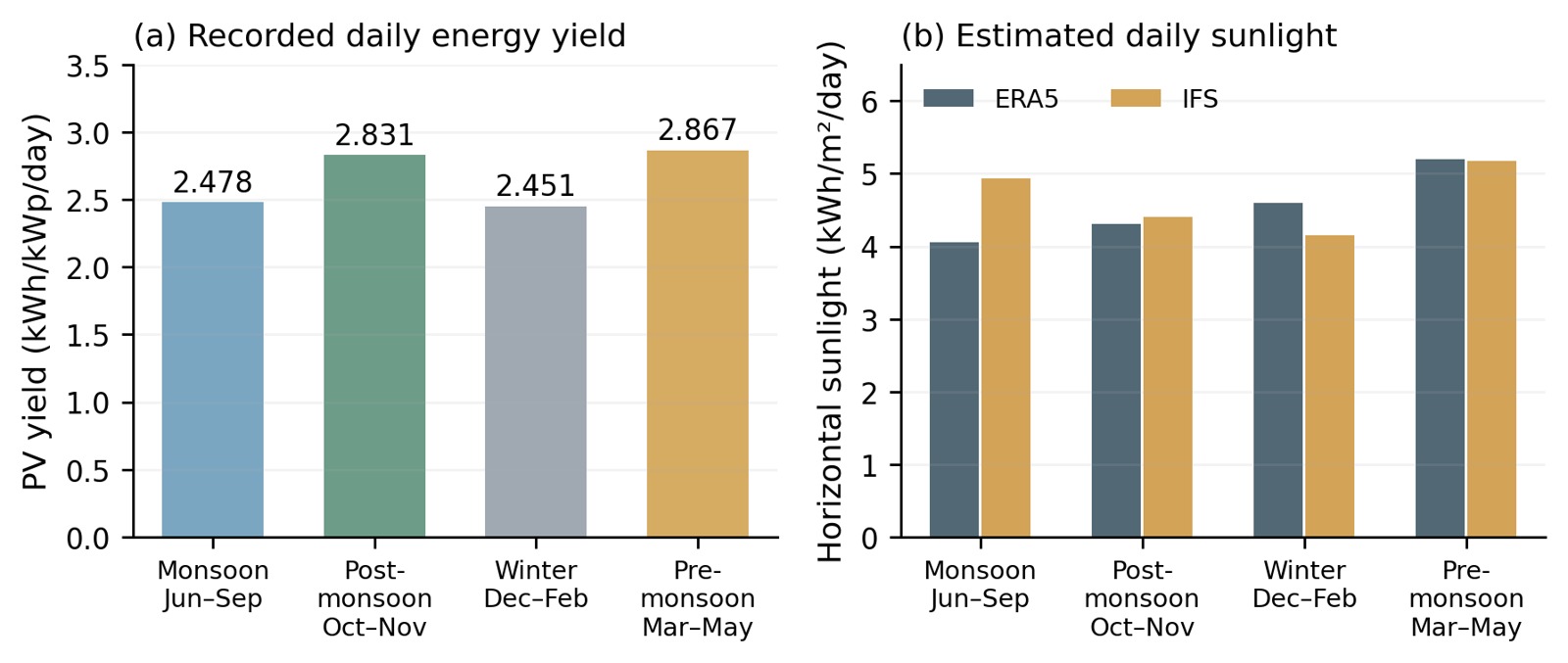
    আলাদা চার-ইনস্টলেশনের ইন্ডাস্ট্রিয়াল তুলনার মৌসুমি ইল্ড, মূল ডকুমেন্ট থেকে নেওয়া। দৈনিক প্রোডাক্টিভিটি ও মৌসুমের দৈর্ঘ্য দুটো দেখার কারণ বোঝায়। আবাসিক ডিজাইনে নিজস্ব রুফ ও ডিমান্ড মূল্যায়ন দরকার।
    আলাদা চার-ইনস্টলেশনের ইন্ডাস্ট্রিয়াল তুলনার মৌসুমি ইল্ড, মূল ডকুমেন্ট থেকে নেওয়া। দৈনিক প্রোডাক্টিভিটি ও মৌসুমের দৈর্ঘ্য দুটো দেখার কারণ বোঝায়। আবাসিক ডিজাইনে নিজস্ব রুফ ও ডিমান্ড মূল্যায়ন দরকার।

    মাসভিত্তিক জেনারেশন হিসাব করে একই ইন্টারভ্যালের ডিমান্ডের সঙ্গে তুলনা করুন। ভবনে ব্যবহৃত সোলার, এক্সপোর্ট, ব্যাটারি চার্জিং ও গ্রিড ইমপোর্টের ভূমিকা আলাদা। প্রতিটি এনার্জি স্ট্রিমে প্রযোজ্য ট্যারিফ ও অনুমোদিত সেটেলমেন্ট ব্যবহার করুন।

    কোটেশনগুলো তুলনাযোগ্য করুন

    • মডিউল, ইনভার্টার, প্রযোজ্য ব্যাটারি, স্ট্রাকচার, কেবল, প্রটেকশন, মিটারিং, ইনস্টলেশন, অনুমোদন, টেস্টিং ও মেইনটেন্যান্সসহ পূর্ণ স্কোপ চান।
    • অনুমান করা মাসিক জেনারেশন ও ভবনে ব্যবহারের অংশ দেখাতে বলুন।
    • ব্যাটারির ব্যবহারযোগ্য ক্যাপাসিটি, ওয়ারেন্টির ডিউটি, রিপ্লেসমেন্ট অনুমান ও নির্দিষ্ট ব্যাকআপ লোড লিখুন।
    • যোগ্য বিশেষজ্ঞ দিয়ে রুফ স্ট্রাকচার, অ্যাক্সেস, ড্রেনেজ, ইলেকট্রিক্যাল প্রটেকশন ও মোটরের কমপ্যাটিবিলিটি দেখুন।
    • যাচাইকৃত মোট খরচ ও বার্ষিক নিট সেভিংস থেকে পেব্যাক হিসাব করুন। অপারেটিং ও রিপ্লেসমেন্ট খরচও দেখান।

    প্রাথমিক ফিজিবিলিটি নোটে আগের কোটেশন ও সেভিংসের অনুমান আছে। এই ব্লগের উদাহরণ হিসাবের পদ্ধতি ব্যাখ্যা করে। বর্তমান ক্রয় সিদ্ধান্তে বর্তমান স্কোপ, ট্যারিফ, ডিমান্ড রেকর্ড ও সরবরাহকারীর প্রতিশ্রুতি দরকার।

    আমার ব্যবহারিক মত

    আগে ভবনের মিটারিং করুন, তারপর প্রয়োজনীয় ফাংশন কিনুন। গ্রিড-কানেক্টেড PV দিনের এনার্জি দিতে পারে। মাপা ব্যাকআপ বা টাইম-শিফটিং প্রয়োজন যুক্তিসংগত হলে স্টোরেজ যোগ হবে। জেনারেশন, ইমপোর্ট-এক্সপোর্ট মাপা ও নির্ধারিত ব্যাকআপ ডিউটি কীভাবে দেখানো হবে, আগে ঠিক করুন।

    অফিশিয়াল গাইড

    বর্তমান অনুমোদন ও মিটারিং প্রক্রিয়া ডিস্ট্রিবিউশন ইউটিলিটির সঙ্গে যাচাই করতে স্রেডার Net Metering Guideline 2025 এবং পাওয়ার ডিভিশনের নেট-মিটারিং তথ্য ব্যবহার করুন।

    বাংলাদেশে রুফটপ সোলারের পারফরম্যান্স · দিয়াবাড়ির ওয়াটারলগিং ও সলিড ওয়েস্ট ম্যানেজমেন্ট · প্লান্ট ডেটা দিয়ে এক্সেল অনুশীলন
    হোমপেজে ফিরুন · English version

  • Rooftop Solar for Apartment Common Services

    বাংলায় পড়ুন · Home

    For an apartment building, the solar decision starts with the common-service meter. Lifts, water pumps, corridor lighting, and outdoor lighting operate at different times. A monthly bill can show their combined energy use, but it cannot show how much demand coincides with sunshine.

    I revisited a residential solar feasibility case with three towers and six lifts. Its most useful lesson is the need to separate daytime energy savings, grid export, and backup power before comparing quotations.

    Audit the existing system first

    If panels are already on the roof, record what they deliver before buying additional equipment. Check the meter boundary, inverter generation, import and export registers, shading, and operating history. Log the common services over a representative period, ideally at intervals short enough to see lift and pump demand. Include weekdays, weekends, and expected seasonal changes.

    Compare the three architectures

    OptionMain useEvidence needed
    Grid-connected PVUses solar alongside the grid and may export under the approved arrangementDaytime demand, export eligibility, meter arrangement, and utility approval
    Hybrid PV with batteryAdds a defined backup or time-shifting dutyEssential loads, required duration, usable storage, inverter power, and motor-starting behavior
    PV with battery and no exportServes approved loads within a controlled electrical arrangementLoad matching, battery duty, protection, and treatment of surplus energy

    A grid-connected system’s behavior during a grid outage depends on its approved design and protection. A battery system needs a specified backup circuit and operating mode. Verify the duty in the proposal and commissioning demonstration.

    Keep kW and kWh separate

    Kilowatts describe power. Kilowatt-hours describe energy over time. A 30 kWh battery label does not establish whether an inverter can start a lift motor, nor does it guarantee 30 kWh delivered at the load.

    For an illustrative energy check, assume 30 kWh nominal storage, an 80% usable fraction, and 90% conversion efficiency. Delivered energy is approximately 30 × 0.80 × 0.90 = 21.6 kWh. At a steady 5 kW load, that is about 4.3 hours before allowing for further reserve or changing load. A lift system also needs a separate power, starting-current, control, and safety assessment.

    Use a seasonal generation budget

    Seasonal yield from the separate four-installation industrial comparison, extracted from its source document
    Seasonal yield from the separate four-installation industrial comparison, extracted from its source document. It illustrates why daily productivity and season length both matter. Residential design needs its own roof and demand assessment.

    Estimate generation by month and compare it with demand in the same intervals. Self-consumed solar, exported solar, battery charging, and grid imports have different roles in the calculation. Use the applicable tariff and approved settlement arrangement for each energy stream.

    Make quotations comparable

    • Ask for a complete scope covering modules, inverters, batteries where applicable, structures, cabling, protection, metering, installation, approvals, testing, and maintenance.
    • State the assumed monthly generation and the share expected to be used within the building.
    • Show battery usable capacity, warranted duty, replacement assumptions, and the defined backup loads.
    • Check roof structure, access, drainage, electrical protection, and motor compatibility with qualified specialists.
    • Calculate payback from verified total cost and annual net savings, with operating and replacement costs visible.

    The early feasibility note contains preliminary quotations and savings assumptions. The blog’s worked example explains the calculation method. A current purchase decision needs current scope, tariffs, demand records, and supplier commitments.

    My practical view

    Meter the building first, then buy the functions it needs. Grid-connected PV can address daytime energy. Storage earns its place when a measured backup or time-shifting requirement justifies it. Agree in advance how the team will demonstrate generation, import/export measurement, and the specified backup duty.

    Official guidance

    Use SREDA’s Net Metering Guideline 2025 and the Power Division’s net-metering information to check the current approval and metering process with the distribution utility.

    Rooftop Solar Performance in Bangladesh · Diabari Waterlogging and Solid Waste Management · Practice Excel with plant data

    Back to Home · বাংলা সংস্করণ

  • বাংলাদেশে রুফটপ সোলারের পারফরম্যান্স

    Read in English · হোমপেজ

    সবচেয়ে বেশি বিদ্যুৎ উৎপাদন করা রুফেরও প্রতি ইনস্টলড ক্যাপাসিটিতে আউটপুট উন্নয়নের সুযোগ থাকতে পারে। মাসিক এনার্জি রিপোর্টে এই পার্থক্য সহজে চোখ এড়িয়ে যায়। মধ্য বাংলাদেশের চারটি ইন্ডাস্ট্রিয়াল রুফটপ ইনস্টলেশনের তুলনা দুটি প্রশ্ন দিয়ে শুরু করেছি। মোট কত বিদ্যুৎ এসেছে এবং প্রতি ইনস্টলড কিলোওয়াট-পিকে কত এসেছে?

    রেকর্ডের সময় জুন ২০২৪–মে ২০২৬। সম্পূর্ণ জুন ২০২৫–মে ২০২৬ বছরে চার ইনস্টলেশনের মোট ক্যাপাসিটি ২,৭৫৩.২৪৫ kWp এবং জেনারেশন ২,৬৪১.২৫০ MWh। ইনস্টলেশন আলাদা করতে লোকেশন ব্যবহার করা হয়েছে।

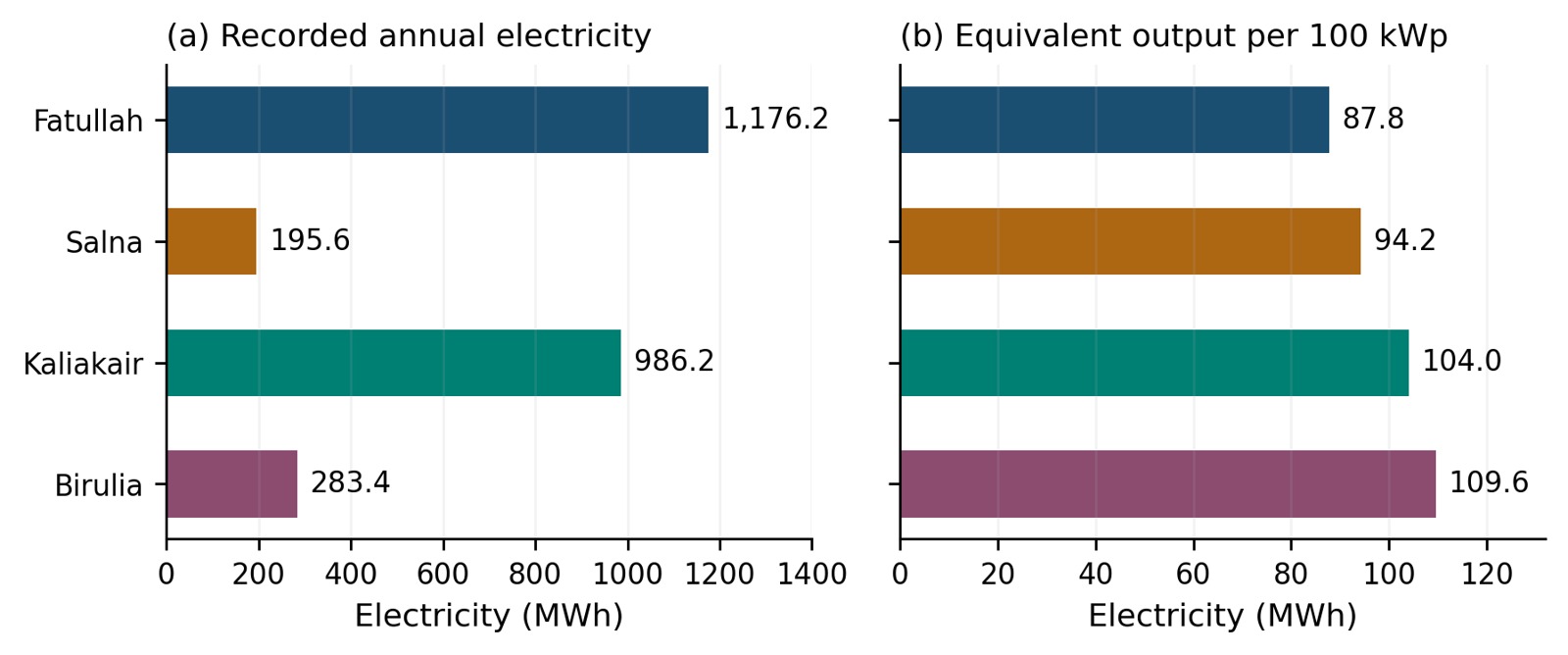
    জুন ২০২৫–মে ২০২৬-এর রেকর্ড করা বার্ষিক বিদ্যুৎ এবং একই ১০০ kWp স্কেলে সমতুল্য আউটপুট। মূল বিশ্লেষণ থেকে নেওয়া চার্ট। স্থান দিয়ে ইনস্টলেশন চিহ্নিত করা হয়েছে।
    জুন ২০২৫–মে ২০২৬-এর রেকর্ড করা বার্ষিক বিদ্যুৎ এবং একই ১০০ kWp স্কেলে সমতুল্য আউটপুট। মূল বিশ্লেষণ থেকে নেওয়া চার্ট। স্থান দিয়ে ইনস্টলেশন চিহ্নিত করা হয়েছে।

    একই রিপোর্টিং বাউন্ডারিতে তুলনা করুন

    লোকেশনDC ক্যাপাসিটি (kWp)বার্ষিক জেনারেশন (MWh)স্পেসিফিক ইল্ড (kWh/kWp)
    ফতুল্লা1,339.2151,176.161878.25
    সালনা207.570195.553942.11
    কালিয়াকৈর947.940986.1611,040.32
    বিরুলিয়া258.520283.3751,096.14

    ফতুল্লায় মোট বিদ্যুৎ বেশি এসেছে, আর বিরুলিয়ার স্পেসিফিক ইল্ড সর্বোচ্চ। তুলনার আগে একই DC ভিত্তিতে ক্যাপাসিটি এবং কাঙ্ক্ষিত ইনস্টলেশন কভার করা এনার্জি মিটার আছে কি না দেখুন। শেয়ার করা ইনস্টলেশন একবারই গণনা করতে হবে।

    হিসাবটি করে দেখুন

    স্পেসিফিক ইল্ড = রেকর্ড করা এনার্জি (kWh) ÷ ইনস্টলড DC ক্যাপাসিটি (kWp)। বিরুলিয়ার জন্য 283,375.2 ÷ 258.520 = 1,096.14 kWh/kWp প্রতি বছর। একই ১০০ kWp স্কেলে প্রায় ১০৯.৬১ MWh। ফতুল্লার রেকর্ড করা ইল্ডে প্রতি ১০০ kWp-তে প্রায় ৮৭.৮২ MWh আসে।

    সর্বোচ্চ ও সর্বনিম্ন স্পেসিফিক ইল্ডের পার্থক্য ২৪.৮১%। এতে রুফ জ্যামিতি, শেডিং, মিটারিং, ইনভার্টার রেকর্ড, ইন্টারাপশন ও মেইনটেন্যান্স ইতিহাস দেখার কারণ পাওয়া যায়। শুধু এনার্জি থেকে কোন ফ্যাক্টর পার্থক্য তৈরি করেছে নির্ধারণ করা যায় না।

    মৌসুমের দৈর্ঘ্য হিসাবে রাখুন

    মৌসুমভিত্তিক দৈনিক এনার্জি ইল্ড ও মডেলড দৈনিক হরাইজন্টাল সানলাইট। মূল বিশ্লেষণ থেকে নেওয়া। চার মৌসুমের দৈর্ঘ্য এক নয়।
    মৌসুমভিত্তিক দৈনিক এনার্জি ইল্ড ও মডেলড দৈনিক হরাইজন্টাল সানলাইট। মূল বিশ্লেষণ থেকে নেওয়া। চার মৌসুমের দৈর্ঘ্য এক নয়।

    এই রেকর্ডে প্রি-মনসুনের দৈনিক স্পেসিফিক ইল্ড সর্বোচ্চ, ২.৮৬৭ kWh/kWp/day। মনসুন ১২২ দিন হওয়ায় বার্ষিক বিদ্যুতের সর্বোচ্চ অংশ, ৩১.৫১%, এই মৌসুমে এসেছে। বাজেটে দৈনিক প্রোডাক্টিভিটি এবং মৌসুমের দিনের সংখ্যা দুটোই রাখতে হবে।

    সানলাইট কতটা বদলেছে দেখুন

    Open-Meteo-এর মাধ্যমে ERA5 ও ECMWF IFS ওয়েদারের সঙ্গে মাসিক এনার্জি মেলানো হয়েছে। লোকেশনগুলোর মডেলড বার্ষিক হরাইজন্টাল ইরেডিয়েশনের বিস্তার ERA5-এ ১.৭৩% এবং IFS-এ ২.৩০%। একই হরাইজন্টাল সানলাইটে ইল্ড স্কেল করলেও র‍্যাঙ্কিং একই থাকে।

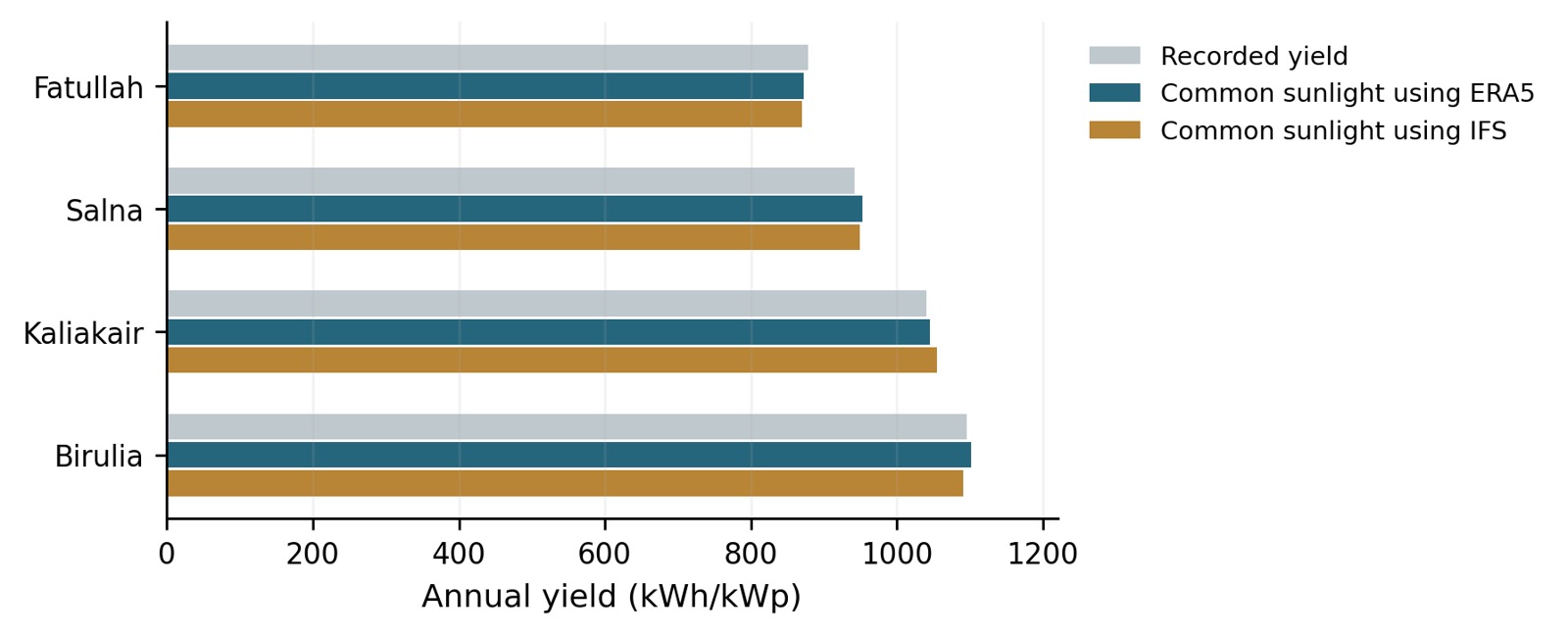
    দুটি ওয়েদার প্রোডাক্ট দিয়ে একই হরাইজন্টাল সানলাইটে স্কেল করা ইল্ডের সঙ্গে রেকর্ড করা ইল্ডের তুলনা। মূল বিশ্লেষণ থেকে নেওয়া। রুফ ও অপারেটিং অবস্থার প্রভাব এতে রয়ে যায়।
    দুটি ওয়েদার প্রোডাক্ট দিয়ে একই হরাইজন্টাল সানলাইটে স্কেল করা ইল্ডের সঙ্গে রেকর্ড করা ইল্ডের তুলনা। মূল বিশ্লেষণ থেকে নেওয়া। রুফ ও অপারেটিং অবস্থার প্রভাব এতে রয়ে যায়।

    অর্থাৎ শুধু আঞ্চলিক সানলাইট দিয়ে পুরো পার্থক্য ব্যাখ্যা হয় না। তুলনায় গ্রিডভিত্তিক হরাইজন্টাল ওয়েদার ডেটা আছে। স্ট্যান্ডার্ড পারফরম্যান্স রেশিও নির্ধারণে উপযুক্ত প্লেন-অব-অ্যারে ইরেডিয়েশন এবং নির্দিষ্ট মনিটরিং বাউন্ডারি দরকার।

    মাসিক O&M রিভিউ কাজে লাগান

    • মাসের শুরু ও শেষের মিটার রিডিং, ইনস্টলড ক্যাপাসিটি ও বাদ পড়া ডেটার নোট রাখুন।
    • ইনস্টলেশন বা মাস তুলনার আগে kWh/kWp এবং kWh/kWp/day হিসাব করুন।
    • আগের বছরের একই মাস ও সংশ্লিষ্ট সানলাইট তুলনা করুন।
    • ব্যাখ্যাতীত পরিবর্তন চলতে থাকলে ইনভার্টার ইভেন্ট, শেডিং, সয়লিং, আউটেজ ও মিটার বাউন্ডারি দেখুন।
    • কাজ, তারিখ ও অপারেটিং অবস্থা লিখে পরের উপযুক্ত সময়ের ফল তুলনা করুন।

    ডেটাসেটে ব্যবহারযোগ্য ৯৫টি ইনস্টলেশন-মাস আছে। আগের বছরে কালিয়াকৈরের একটি মাস পাওয়া যায়নি। তাই সেখানে ম্যাচড তুলনায় ১১ জোড়া মাস ব্যবহৃত হয়েছে। রুফ-প্লেন ইরেডিয়েশন ও মডিউল টেম্পারেচার মাপা রেকর্ডের বাইরে ছিল। ফল কতদূর ব্যবহার করা যায় তা এসব তথ্য নির্ধারণ করে।

    আমার ব্যবহারিক মত

    নির্ভরযোগ্য মিটারিং ও সঠিক ভিত্তিতে তুলনা দিয়ে শুরু করুন। ওয়েদার-অ্যাডজাস্টেড পার্থক্য অনুসন্ধানের সূত্র দেয়। সঠিক মেইনটেন্যান্স কাজ বেছে নিতে ইকুইপমেন্ট ও অপারেটিং প্রমাণ দরকার। এনার্জি সেভিংস প্রস্তাব বা কন্ট্রাক্টরের পারফরম্যান্স দাবি যাচাইয়েও একই শৃঙ্খলা কাজে আসে।

    রেফারেন্স

    Open-Meteo Historical Weather API-এ ওয়েদার প্রোডাক্টের সংজ্ঞা আছে। NREL-এর ওয়েদার-করেক্টেড পারফরম্যান্স রেশিও রিপোর্ট আরও পূর্ণাঙ্গ মনিটরিং ভিত্তি ব্যাখ্যা করে। তুলনায় চার লোকেশনের রেকর্ড করা জেনারেশন ও ক্যাপাসিটি ব্যবহার করেছি। ফিগারগুলো আমার বিশ্লেষণ থেকে নেওয়া।

    অ্যাপার্টমেন্টের কমন সার্ভিসে রুফটপ সোলার · দিয়াবাড়ির ওয়াটারলগিং ও সলিড ওয়েস্ট ম্যানেজমেন্ট · প্লান্ট ডেটা দিয়ে এক্সেল অনুশীলন

    হোমপেজে ফিরুন · English version

  • Rooftop Solar Performance in Bangladesh

    বাংলায় পড়ুন · Home

    The roof producing the most electricity may have room to improve its output per installed panel capacity. That distinction is easy to miss in a monthly energy report. My comparison of four industrial rooftop installations in central Bangladesh begins with two questions. How much electricity arrived, and how much arrived per installed kilowatt-peak?

    The records cover June 2024–May 2026. For the complete June 2025–May 2026 year, the four installations total 2,753.245 kWp and deliver 2,641.250 MWh. Locations are used to distinguish the systems.

    Recorded annual electricity and equivalent output at a common 100 kWp scale, June 2025–May 2026
    Recorded annual electricity and equivalent output at a common 100 kWp scale, June 2025–May 2026. Chart extracted from the source analysis. Place names identify installations.

    Compare equal reporting boundaries

    LocationDC capacity (kWp)Annual generation (MWh)Specific yield (kWh/kWp)
    Fatullah1,339.2151,176.161878.25
    Salna207.570195.553942.11
    Kaliakair947.940986.1611,040.32
    Birulia258.520283.3751,096.14

    Fatullah delivers the most electricity, while Birulia has the highest specific yield. Before making this comparison, check that capacity is stated on the same DC basis and that the energy meters cover the intended installation. Shared installations must be counted once.

    Try the calculation

    Specific yield = recorded energy (kWh) ÷ installed DC capacity (kWp). For Birulia, 283,375.2 ÷ 258.520 = 1,096.14 kWh/kWp for the year. At the same 100 kWp scale, this is about 109.61 MWh. Fatullah’s recorded yield corresponds to about 87.82 MWh per 100 kWp.

    The difference between the highest and lowest specific yields is 24.81%. It is a reason to investigate roof geometry, shading, metering, inverter records, interruptions, and maintenance history. The energy figures alone do not identify which factor caused the difference.

    Keep season length visible

    Daily energy yield and modeled daily horizontal sunlight by season
    Daily energy yield and modeled daily horizontal sunlight by season. Extracted from the source analysis. The four seasons have different lengths.

    Pre-monsoon has the highest daily specific yield in this record, 2.867 kWh/kWp/day. Monsoon contributes the largest share of annual electricity, 31.51%, because its 122 days give it more time to accumulate energy. A budget needs both daily productivity and the number of days in the season.

    Ask how much sunlight changed

    The study pairs monthly energy with ERA5 and ECMWF IFS weather through Open-Meteo. The modeled annual horizontal-irradiation spread between locations is only 1.73% in ERA5 and 2.30% in IFS. Scaling the yields to a common horizontal sunlight basis keeps the same ranking.

    Recorded yield and yield scaled to common horizontal sunlight using two weather products
    Recorded yield and yield scaled to common horizontal sunlight using two weather products. Extracted from the source analysis. The adjustment retains roof and operating differences.

    This makes regional sunlight an incomplete explanation for the observed gap. The comparison uses gridded horizontal weather data. A standard performance-ratio assessment needs an appropriate plane-of-array irradiation basis and a defined monitoring boundary.

    Make the monthly O&M review useful

    • Close each month with opening and closing meter readings, installed capacity, and missing-data notes.
    • Calculate kWh/kWp and kWh/kWp/day before comparing installations or months.
    • Compare matching calendar months and review the corresponding sunlight.
    • For a persistent unexplained change, inspect inverter events, shading, soiling, outages, and the meter boundary.
    • Record the action, date, and operating conditions, then compare the next suitable period.

    The dataset has 95 usable installation-months. One Kaliakair month is unavailable in the earlier year, so matched comparisons use eleven month pairs there. Roof-plane irradiation and module temperature were outside the measurement record. These details define how far the results can be used.

    My practical view

    Start with dependable metering and a fair comparison. A weather-adjusted difference is a prompt for investigation. Choosing the right maintenance action requires equipment and operating evidence. The same discipline helps when reviewing an energy-saving proposal or a contractor’s performance claim.

    References

    Open-Meteo Historical Weather API provides the weather-product definitions. NREL’s weather-corrected performance-ratio report explains a more complete monitoring basis. The comparison uses recorded generation and capacity data for the four locations; the figures above are extracted from my analysis.

    Rooftop Solar for Apartment Common Services · Diabari Waterlogging and Solid Waste Management · Practice Excel with plant data

    Back to Home · বাংলা সংস্করণ